Chiropractic and reflexology: what is the difference?
Two hands-on therapies that are often confused. What each one involves, what it is used for and what a session feels like.
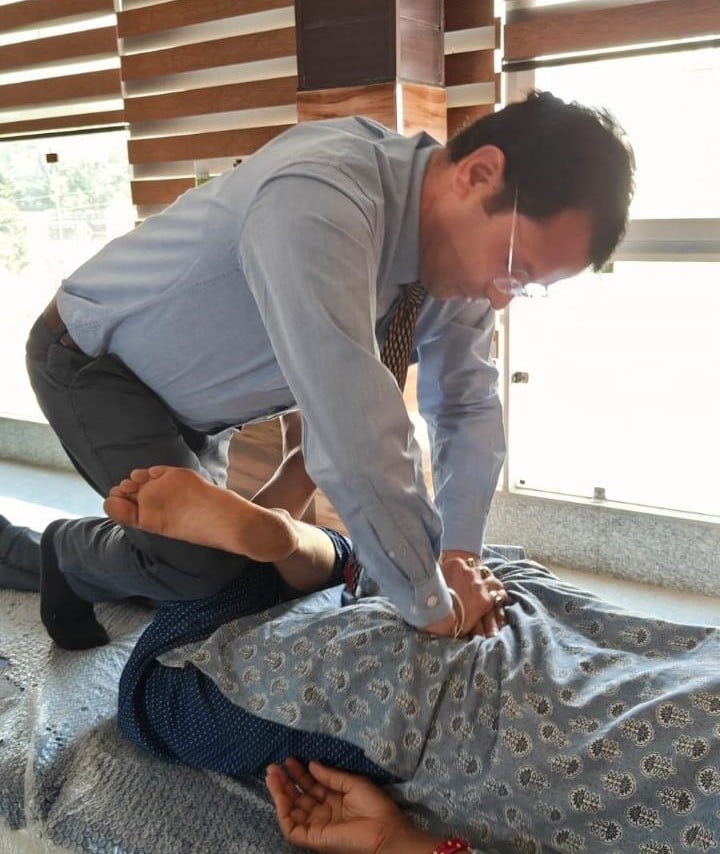
Two hands-on therapies
Chiropractic and reflexology are both manual therapies, meaning the practitioner works with their hands rather than with instruments. They rest on different ideas and feel quite different during a session.
Chiropractic
Chiropractic focuses on the spine, the joints and the muscles around them. The practitioner checks posture and movement, then uses controlled adjustments and mobilisation to improve how a joint moves. It is most often used for back and neck pain, sciatica, pain linked to a slip disc, and stiff joints such as a frozen shoulder.
An adjustment can make a clicking sound. That is gas being released from the fluid inside the joint, not a bone 'going back into place'.
Reflexology
Reflexology applies pressure to specific points on the feet, the hands and sometimes the ears. Reflexology maps link these points to organs and systems elsewhere in the body. A session is usually relaxing and is given while you lie or sit comfortably with bare feet.
Many people use reflexology to relax and to ease tension and discomfort.
Which one is right for you?
That depends on the problem. Pain linked to a joint or the spine is usually assessed for chiropractic care, while reflexology is gentler and suits people who cannot tolerate adjustments. At the clinic the two are sometimes combined, for example when treating painful legs in older patients.
Before any manual therapy, tell the doctor about osteoporosis, a recent fracture or surgery, or blood-thinning medicine.
Have a question about this topic?
Ask on WhatsApp